
Summer is a great time for families to head outdoors.
Here’s a few tips for outings – before you go, check weather forecast, plan clothing and gear, food and water, on your hike, tips for wildlife safety, altitude sickness, extreme heat, summer wildfires.
Planning – Before you go
Day hikes
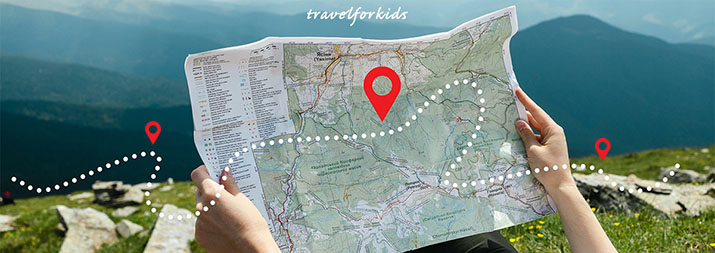
Plan your trail route, and check trail conditions on national park and forest service websites. Trails may not be open or high water prevents crossing a creek.
Have offline maps, cell phone coverage may be spotty or non-existent.
Check the weather forecast!
We can’t emphasize this enough. It isn’t just extreme heat.
It could be rain storms with high winds that capsize big boats in Lake Tahoe. Summer thunderstorms in the southwest that fill up canyons and are danger to hikers. Wildfires that make air unhealthy.
Clothing and gear
Have layers to stay warm, in case weather changes. Hike in closed-toed shoes, not flip-flops.
Bring along flashlight or headlamp, toilet paper, sunscreen, hats.
Food and water
Everyone needs energy, have plenty of food and extra snacks with you.
In warm weather, bring lots of water! Also, during the day drink plenty of water – hiking on trails in bright sunlight, it’s easy to get dehydrated.
While you’re there
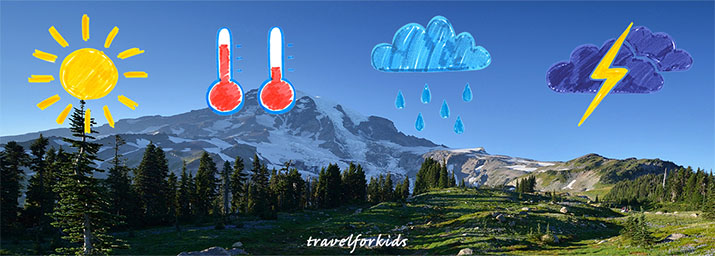
During the day, check conditions around you.
Are rain clouds gathering, do you have appropriate rain gear? Is weather really too hot to keep hiking? Is the wind blowing hard and kids are getting cold?
Also check your group. Is anyone thirsty or hungry – break out water and snacks. Is everyone able to keep up, or having any difficulty? Take a break. But remember, if you’ve hiked out one mile, it’s one mile back to your car or comfy lodge.
The goal is to have a good time – sometimes, common sense says it’s time to turn back.
Stay on the trail!
Leaving the trail, you run the risk of injury – getting lost, falling off a waterfall, sliding down a steep ridge …
In thermal areas such as Yellowstone, Lassen, never leave the boardwalk, ground is boiling hot.
Wildlife safety
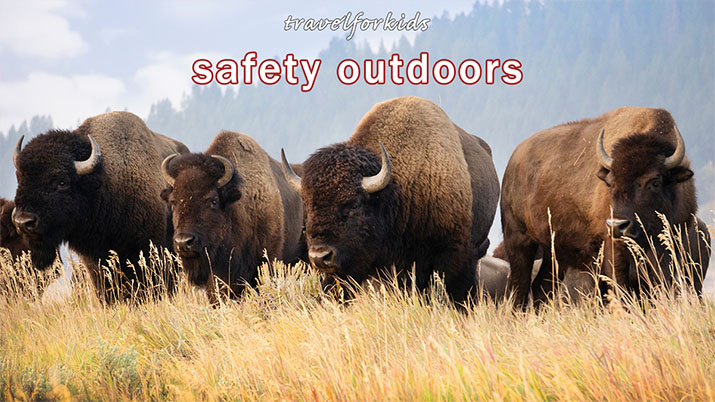
Do not get too close to wildlife!
Always stay at least 100 yards (91 m) away from bears, at least 25 yards (23 m) away from all other large animals, including bison and elk.
Do not feed the animals, especially birds, squirrels and chipmunks. Chips and snacks are bad for many animals.
Altitude sickness
Western United States has high mountains. Driving from sea level to altitude above 8,000 ft., don’t go out and hike next day. Your body won’t have time to adjust, result is altitude sickness.
Altitude sickness affects people differently, but even very fit people may feel serious effects – nausea, vomiting, dizziness, headache.
Extreme heat
In summer, Joshua Tree, Death Valley, Grand Canyon, temperatures can be over 100. Death Valley always has the hottest temperatures, 120+ degrees.
Getting out of an air conditioned car in summer, initially it might not seem that hot.
But temperatures over 100 degrees are significant safety risk, particularly without access to water or shade. Extreme heat seriously impacts your body and can result in heat stroke, which is life threatening.
Summer wildfires
Each summer, wildfires are caused by lightning strikes and human activities. Drought, high winds and dry grass conditions create extreme fire danger.
If a wildfire is burning in your area, don’t go out on a hike – air quality alone will make it unhealthy. Fires are unpredictable, access roads can close, trails may be engulfed in flames.
Five Favorite California California Hikes with Kids
Travel for Kids
Created by people, not AI